Harendegha Script: Weaving Romance into Your Brand's Story
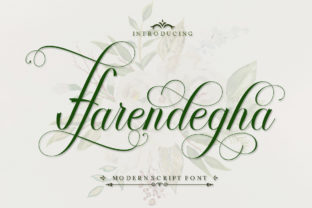
There are fonts that simply perform a function, and then there are fonts that feel like an event. Harendegha Script falls firmly into the latter category. It doesn't just write words; it composes them with a delicate, joyful flourish that feels both personal and celebratory. Imagine the confident loops of a calligrapher's pen meeting the spontaneous energy of a handwritten love note. That's the essence of this typeface. It’s a premium font designed not for bulk text, but for creating those standout moments where you want your audience to lean in and feel a connection.
Visually, Harendegha Script is a masterclass in balance. The letterforms are romantic and delicate, featuring fluid strokes and elegant, flowing connections that give it an organic, human quality. Yet, it avoids being overly formal or stuffy. The "joyful twist" comes through in its subtle bounces, varying baseline, and the way certain letters playfully extend, like the tail of a 'y' or the crossbar of a 't'. It’s a handwritten font that feels authentic, not digitized to the point of sterility. This gives it a versatile personality: it can feel luxurious and bespoke on a wedding invitation, yet approachable and friendly on a boutique café's menu.
Where Harendegha Truly Shines: Beyond the Wedding Invite
While its romantic nature makes it a natural fit for nuptial designs, the true power of Harendegha Script lies in its ability to inject warmth and personality across a wide spectrum of projects. Think of it as a design tool for adding a human touch in a digital world.
For brand identity, it’s a secret weapon. A logo design using Harendegha can instantly communicate a brand that is artisanal, caring, and detail-oriented. It works beautifully for businesses in the wellness, beauty, gourmet food, floral, and boutique hospitality spaces. Paired with a clean sans serif font for body text, it creates a stunning visual hierarchy that feels both professional and deeply personal. The key is to use it strategically—for the primary logotype, a hero tagline, or a specific branding element—not for every piece of text.
In editorial design and publishing, this script font can transform layouts. Use it for chapter openers in a lifestyle magazine, pull quotes in a blog post, or the title on a book cover. It draws the eye and sets a specific emotional tone that a standard serif font might not achieve. For packaging design, especially for small-batch products, it adds that coveted "made with love" feel. Imagine it on a artisanal chocolate bar label or a scented candle box—it tells a story before the customer even reads the product description.
Digital applications are equally compelling. In web design, Harendegha can be used for impactful headlines on landing pages or in email marketing graphics to boost engagement. It’s a powerhouse for social media graphics, where stopping the scroll is paramount. A beautifully scripted quote or a sale announcement in Harendegha feels more like a personal invitation than a corporate ad. For entrepreneurs and content creators, it’s a creative font that helps build a recognizable and relatable visual voice.
The Practical Guide to Using a Display Font Like Harendegha
Adopting a strong display font like Harendegha Script requires more than just liking how it looks. Its effectiveness is entirely dependent on context and application. Here’s how to integrate it thoughtfully into your projects.
Evaluate the Fit. First, be honest about your project's goal. Is it to convey trustworthiness and clarity? A sans serif might be better for the core message. Is it to evoke emotion, nostalgia, or luxury? Then Harendegha is a strong candidate. It’s not a workhorse for body copy; its charm is in its detail, which gets lost in small text. Think of it as the accent wall in a room, not the wall-to-wall carpet.
Master the Font Pairing. This is critical. Pairing Harendegha with another script will create visual chaos. The goal is contrast and harmony. A classic and effective strategy is to pair it with a sturdy, neutral sans serif font like Montserrat, Lato, or Open Sans. This creates a clear hierarchy: Harendegha for emotional impact on headlines, and the sans serif for readable body text. Alternatively, it can pair beautifully with a traditional serif font like Garamond or Playfair Display for a more classic, editorial feel.
Test for Readability. Always, always test your design at the intended size and on the intended medium. Script fonts can present legibility challenges, especially with complex letter combinations or at small sizes. Look at the word "minimum"—if the 'i's and 'm's blur together, you may need to increase letter-spacing (tracking) slightly or choose a different word. View it on a mobile screen and in print if possible.
Understand the Licensing. Harendegha is a commercial font, a professional design asset. This means it typically requires a license for use in commercial projects—logos, products for sale, client work. Always check the license details from the foundry or distributor. Using a premium font correctly ensures you have the legal right to use it and supports the type designers who create these tools for us.
Ultimately, Harendegha Script is more than just a collection of glyphs. It’s a tool for storytelling. By understanding its personality and applying it with intention, you can move beyond generic typography and create designs that resonate on a more human, emotional level. It’s about choosing the right word—and the right letterform—to make your message not just seen, but felt.